"Soviet fires Earth satellite into space. It is circling the globe at 18,000 M. P. H. Sphere tracked in 4 crossings over U. S."
- New York Times, October 5, 1957
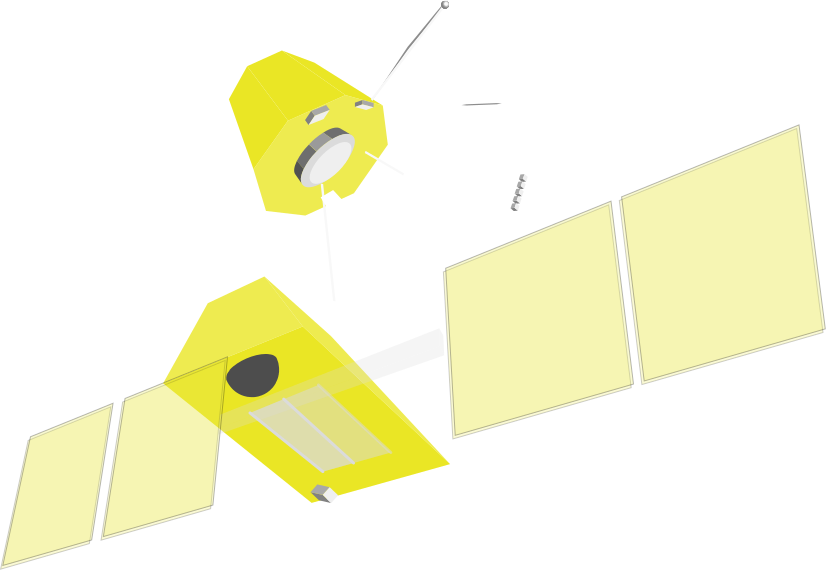
October 4, 1957, 19:29:34 UTC, Baikonur Space Station. The Soviet Union launched Sputnik 1, mankind's first satellite.
January 4, 1958. After flying about 6,000,000 km, Sputnik 1 entered Earth's atmosphere and burned away. Since than, the advance into space is always one of mankind's greatest challenges.
Count Evolution of the Satellite Launches
However, ironically, this great challenge of mankind could make us no longer go into space.
Once a satellite lands in orbit around Earth, it is trapped in orbit, and wandering around Earth.
Forever.
What if they collide or bump into each other?
1996
THE FIRST COLLISION
Cerise satellite hit by a catalogs debris object, leftover from an Ariane rocket launched in 1986. It left the Cerise satellite severely damaged. This was the first verified collision between two artificial objects in space.
2009
TWO SATELITES CONFLICTED
The derelict Kosmos 2251 satellite, launched 1993 and operational iridium 22 satellite, lanched 1997 collided with a relative speed of 11.7km/s, creating thousands of debris fragments.
It makes countless debris from the size of a small coffee bean to a computer monitor. Those debris travel at about 40,000 km/h, meaning a collision with a coffee bean size fragment can create more than 10 times as much energy as a bullet.
Space Debris Producing Events from 1965 to 2019
And sometimes, those fragments fall to Earth.
Amounts of Debris Crashes to Earth from 2007 to 2017
So, right now, who is the most responsible for this?
U.S.? or maybe... China?
Well, let's take a look.
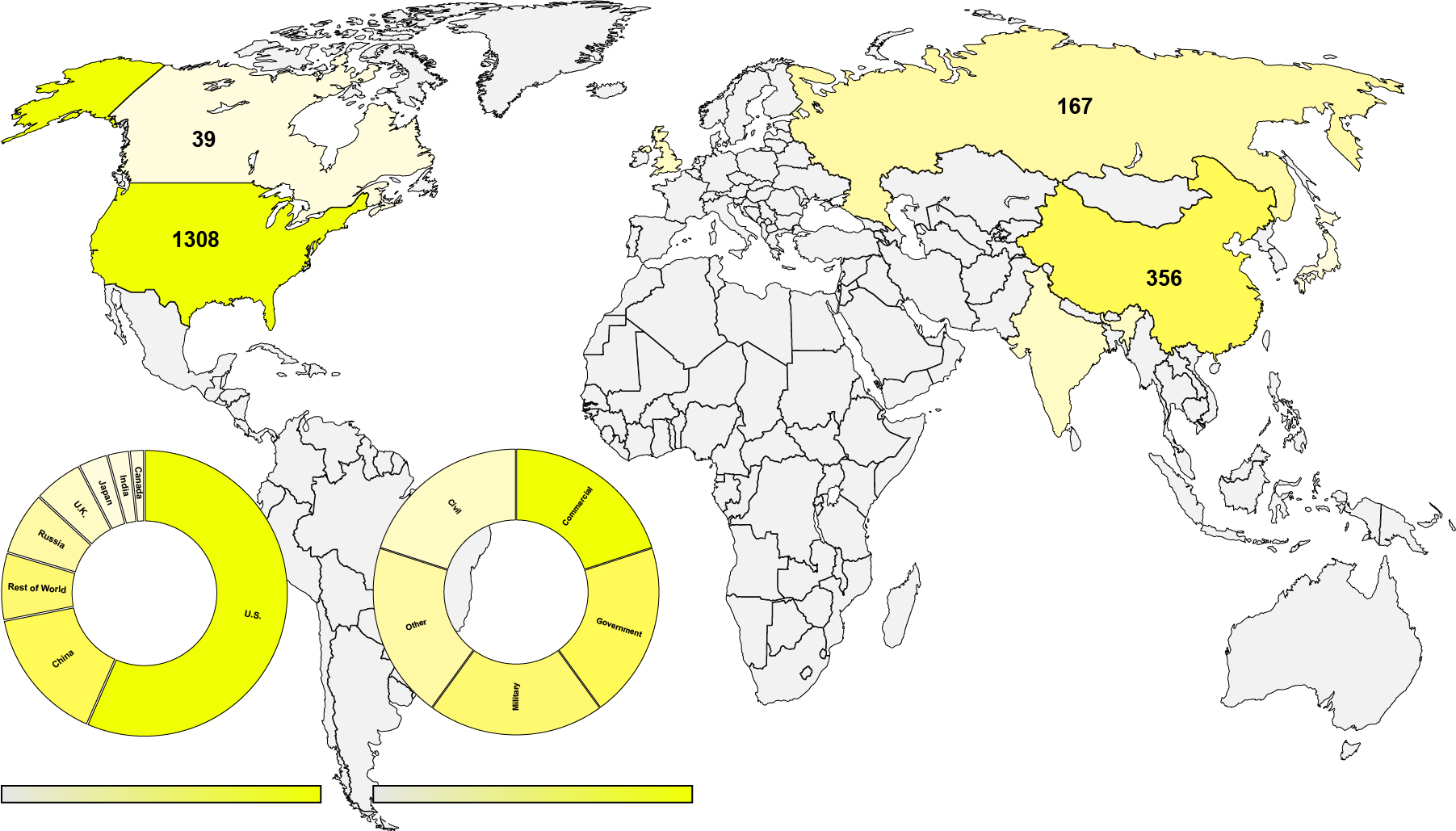
The Countries with the Most Satellites in Space in 2020
And what are those for?
Organizations that Dominate Earth’s Orbit in 2020
Such accelerating space activities, boost the risk of collisions which would create dramatically more debris.
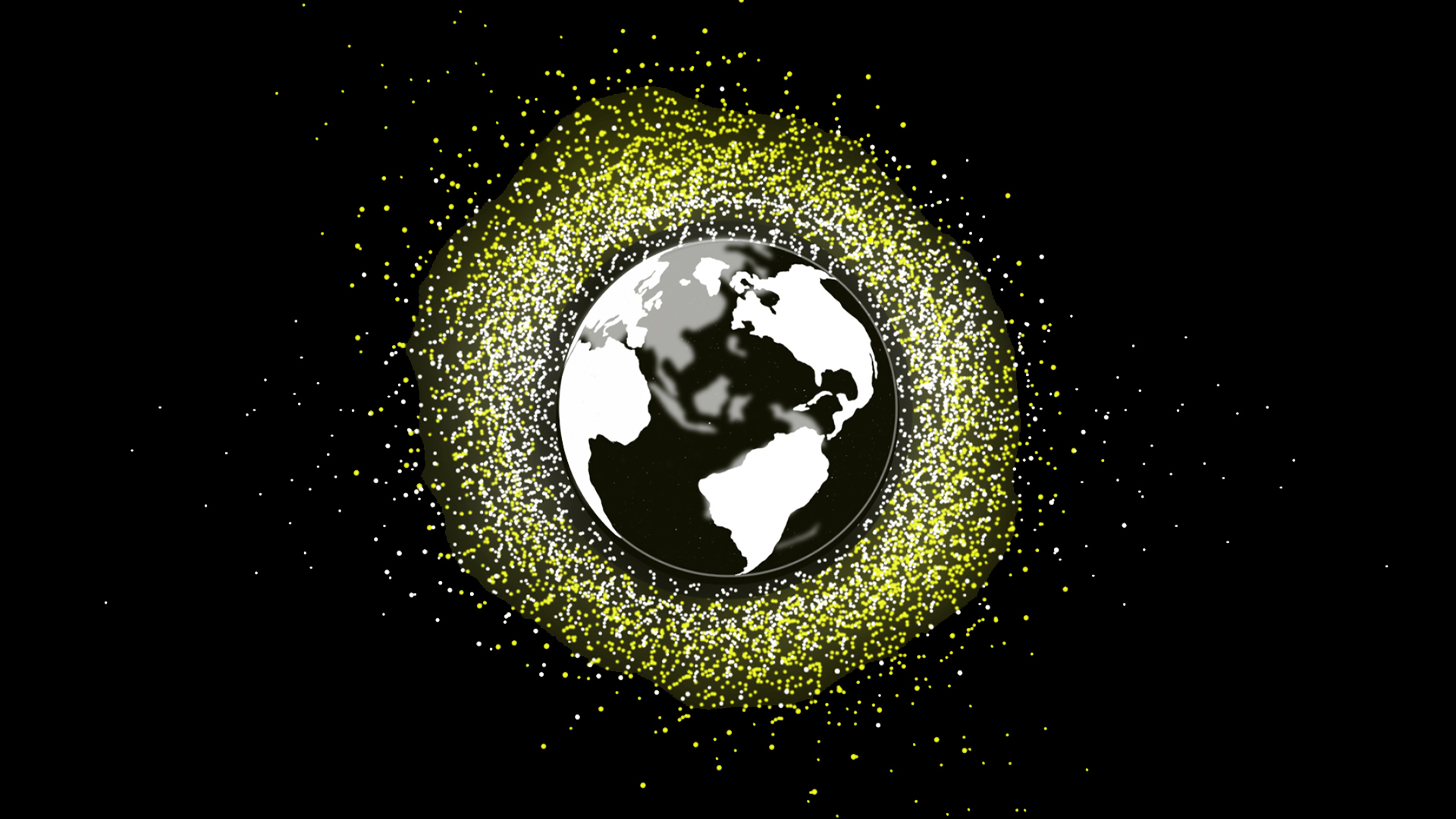
Debris Count Evolution from 1960 to 2020
And this is nothing compared to what is coming. Along with the advent of the Commercial use of space, private companies have begun to launch mega-constellations into low-Earth orbit.
Satellite Launch Forecast for Next 7 Years
If the current trend continues, it's expected to reach
THE KESSLER SYNDROME
Countless amount of debris will eventually turn into large clouds, each of which will cause more and more collisions, and we will get out of control.
Expected Growth of Future Debris
Eventually, everything in orbit will be destroyed. This is the Kessler syndrome.
Expected Catastrophic Collisions in the Next 200 Years
Now... What?
In order to guarantee an effective and balanced implementation of debris mitigation practices, identified control measures need to be based on an international consensus.
The next step after international standardization, the transfer of guidelines into actual regulations. While some countries have already taken this step and reflected space debris mitigation in their national regulations, worldwide implementation is still pending.